Personal space
How parents can help children practice personal space
A practical, neurodiversity-affirming guide to making body-space practice clearer, kinder, and easier to rehearse at home.
2026-06-22 · 5 min read
SocialQuest AI is an educational practice app. It does not diagnose or replace professional support.
Make the invisible rule visible
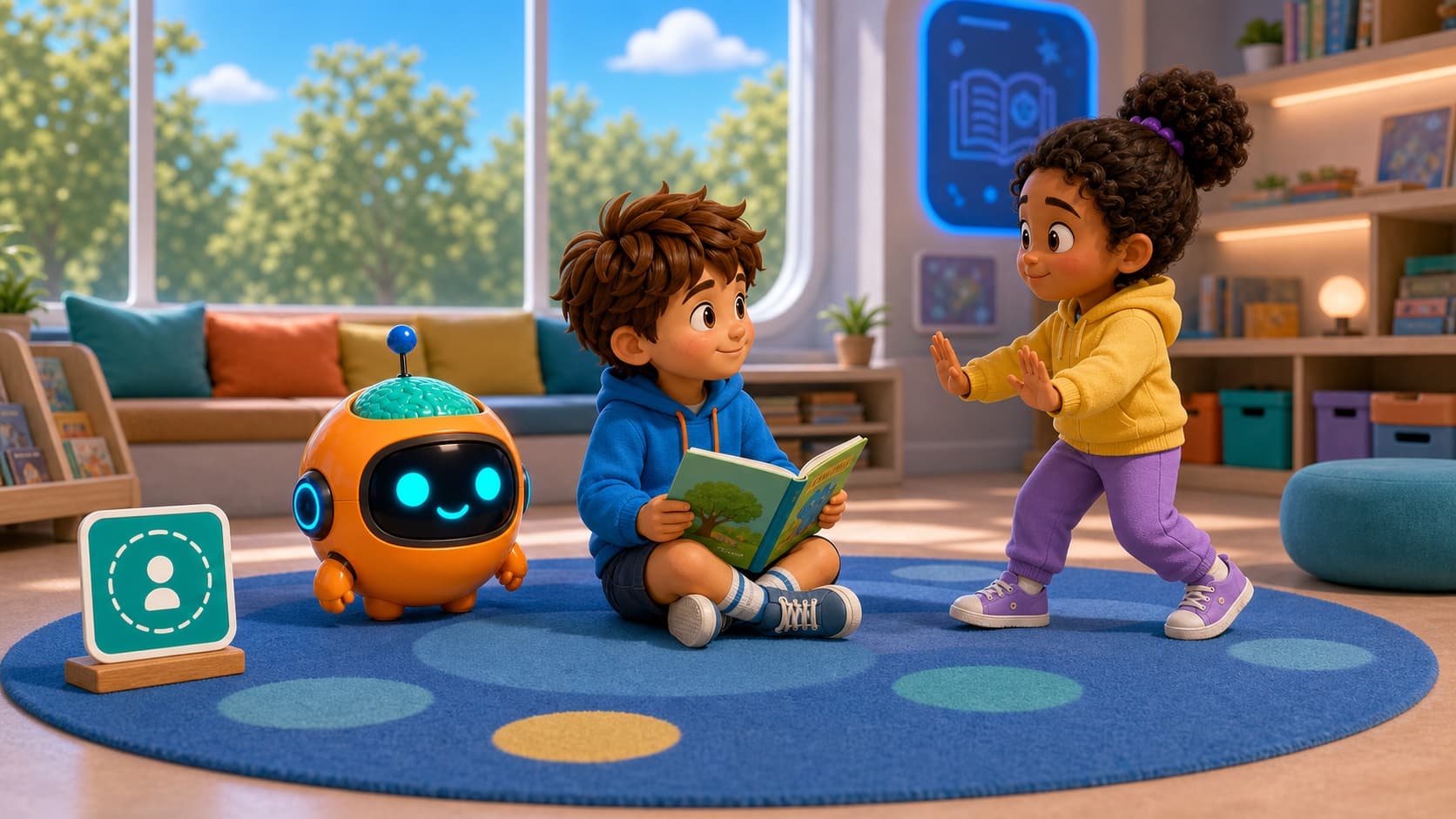
Personal space can feel confusing because the rule changes by place, person, culture, and activity. Instead of saying only 'back up,' try naming the visible clue: 'During story time, each person keeps their knees on their own carpet square.'
Use supports without shame
Many children benefit from concrete supports such as floor markers, arm-length examples, visual cards, or a short phrase like 'space check.' These supports can help autistic children, children with ADHD, sensory-seeking children, anxious children, and any child who learns best through clear examples.
Practice consent and repair
Body-space learning should include asking, pausing, and repairing. Children can rehearse kind words such as 'Can I sit here?' 'Do you need more space?' or 'Sorry, I moved too close.' The aim is respectful connection, not perfect behavior.
Connect practice to real life
A SocialQuest AI mission can let a child replay a reading rug, playground, or lunch-table moment before trying one small step offline. Within the Little AI Minds Universe, the same calm practice style can support school routines, confidence, and family-led learning goals.
Keep exploring SocialQuest
Little AI Minds Universe
SocialQuest AI is part of a broader child-friendly learning family
When it fits a family’s goals, SocialQuest can sit alongside other Little AI Minds learning companions for questions, school routines, and confidence-building practice.
Little AI Minds
A broader child-friendly AI learning universe with Sparky and the AI Kids Crew.
Coming soonSparky AI ChatBot
A companion-style learning experience for asking questions with Sparky.
Coming soonSchoolQuest AI
A future school-skills companion for routines, learning confidence, and parent support.